
The National British Neuroscience Olympiad 2025 brought together students, researchers, and educators for a dynamic virtual event showcasing neuroscience research, education, and competition. The event featured welcome talks, cutting-edge research presentations, a student competition, and an awards ceremony celebrating the next generation of neuroscientists.

Event Overview
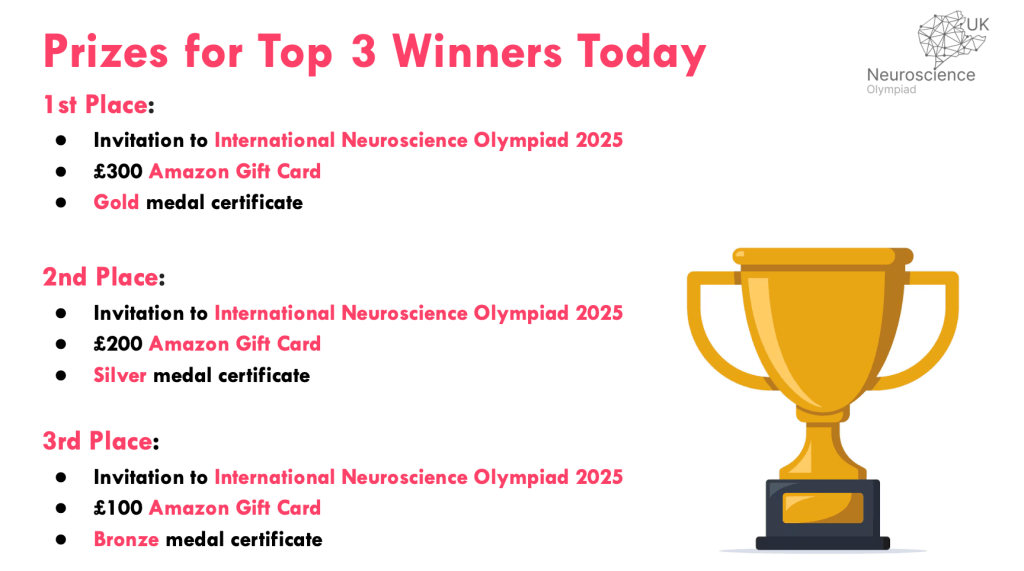
Martyna, lead organizer of the Olympiad, opened the event with a welcome talk outlining the structure: keynote presentations, a live neuroscience exam, a Q&A session, and the closing awards ceremony. She emphasized the Olympiad’s mission to inspire students to pursue careers in neuroscience and highlighted the opportunities offered to top performers, including invitations to the International Neuroscience Olympiad and Amazon gift cards.
Martyna also discussed the long-term benefits of participating in Olympiads—developing critical thinking skills, strengthening university applications, and building resilience through academic challenges.
Olympiad Preparation Strategies
In a dedicated session, Martyna outlined effective strategies for preparing for neuroscience Olympiads:
- Creating a structured study plan with realistic goals
- Using multiple learning resources, including textbooks, videos, and audiobooks
- Actively engaging with materials through annotation, note-taking, and repetition
- Joining study clubs and tracking progress to stay motivated
- Rewarding progress and developing genuine interest in neuroscience topics
She encouraged participants to share their own preparation challenges and successes, fostering a sense of community among students.
Research Presentations
A Drosophila Model of Alzheimer’s Disease
Adam presented his research on a new fruit fly (Drosophila) model for studying Alzheimer’s disease. He explained how mutations in the APPL protein and its cleavage by secretases can lead to amyloid-like plaque formation, paralleling human pathology. The model revealed protective cellular mechanisms that may prevent toxic protein accumulation, offering promising insights for therapeutic development.
Adam highlighted the advantages of fruit flies—short generation times and advanced genetic tools—over traditional models like mice and stem cells, while also addressing current limitations in Alzheimer’s research.
Deep Brain Stimulation for Movement Disorders
Ammar, a UK-trained neurosurgeon, shared his expertise in deep brain stimulation (DBS) for conditions such as Parkinson’s disease, dystonia, and Tourette’s syndrome. He described the precision required to target specific brain structures, the technical challenges of DBS surgery, and the use of fluorescent drugs to visualize brain tumors.
Ammar also discussed advances in cell therapy for Parkinson’s disease and addressed questions on topics ranging from DBS effects on facial expression to methods for mapping brain structures via electrical impedance.
Student Engagement and Competition
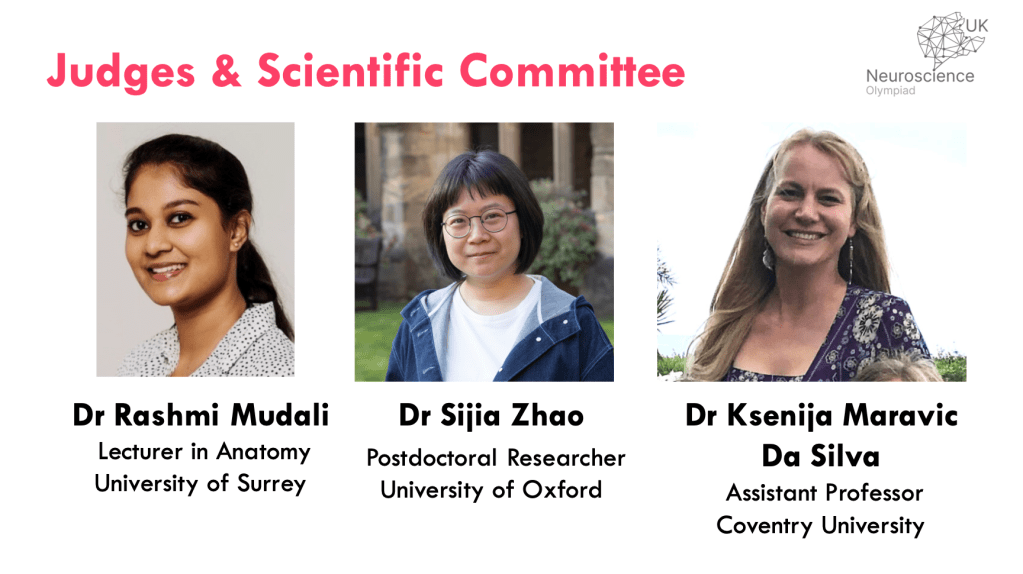
The competition segment featured a 15-question neuroscience exam covering neurotransmitters, brain anatomy, and imaging techniques. Martyna guided students through the exam, explained answers, and facilitated the live Q&A session, supported by judges Dr. Rashmi Mudali, Dr Ksenija Maravic Da Silva, and Dr. Sijia Zhao.
Audience participation was also encouraged through live questions, with neuroscience textbooks awarded as prizes.
Brain Bee Champion’s Perspective
Tomos, the 2024 British Brain Bee Champion, reflected on his journey from national competitions to the International Brain Bee. He credited his success to consistent preparation, teamwork, and networking, noting that the experience helped him secure a place at Cambridge University to study medicine.
Tomos encouraged students to build friendships, explore AI tools for revision, and participate in initiatives like the Ideathon competition to sharpen research skills. His advice: enjoy neuroscience and leverage every opportunity the Olympiad provides.
Awards Ceremony
The Olympiad concluded with the announcement of the top three winners:
- 1st Place: Mehul Rathi
- 2nd Place: Pouria Karimi
- 3rd Place: Hannah Weissmann
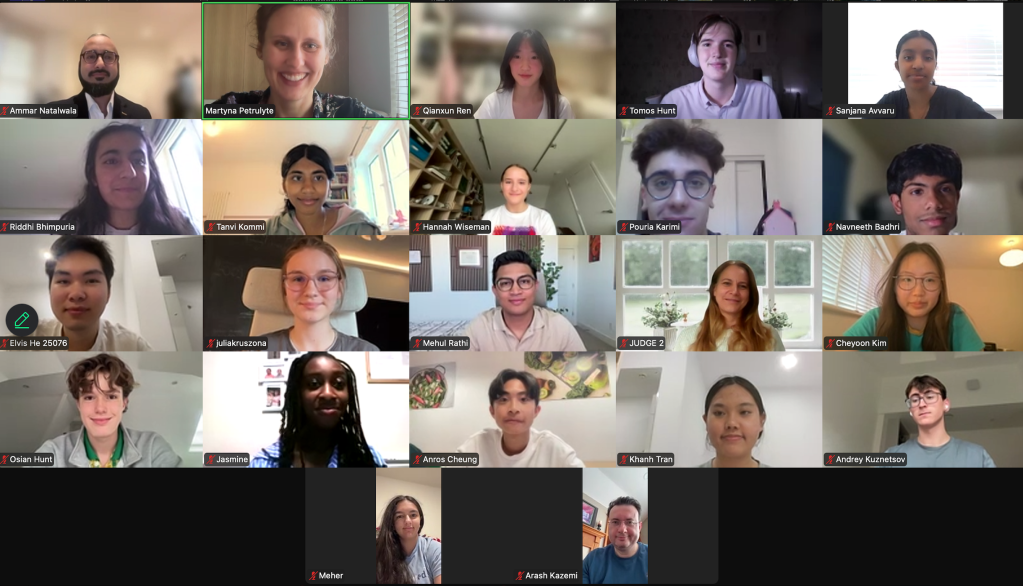
The top 10 participants received official rankings and certificates, while the top three winners were awarded Amazon gift cards and full sponsorship to compete in the International Neuroscience Olympiad. A virtual group photo with participants and judges marked the close of the event.
Martyna concluded by promising detailed information about the 2026 competition—including curriculum and timeline—to be released in November.
Looking Ahead
The National British Neuroscience Olympiad 2025 showcased the power of academic competition to inspire young scientists. Through research talks, challenging exams, and direct engagement with experts, students gained valuable skills and connections.
The British Neuroscience Olympiad team now turns its attention to the upcoming International Neuroscience Olympiad, where the UK’s top students will represent the nation on the global stage.
 BRITISH NEUROSCIENCE OLYMPIAD
You must be logged in to post a comment.